Feeling the Void
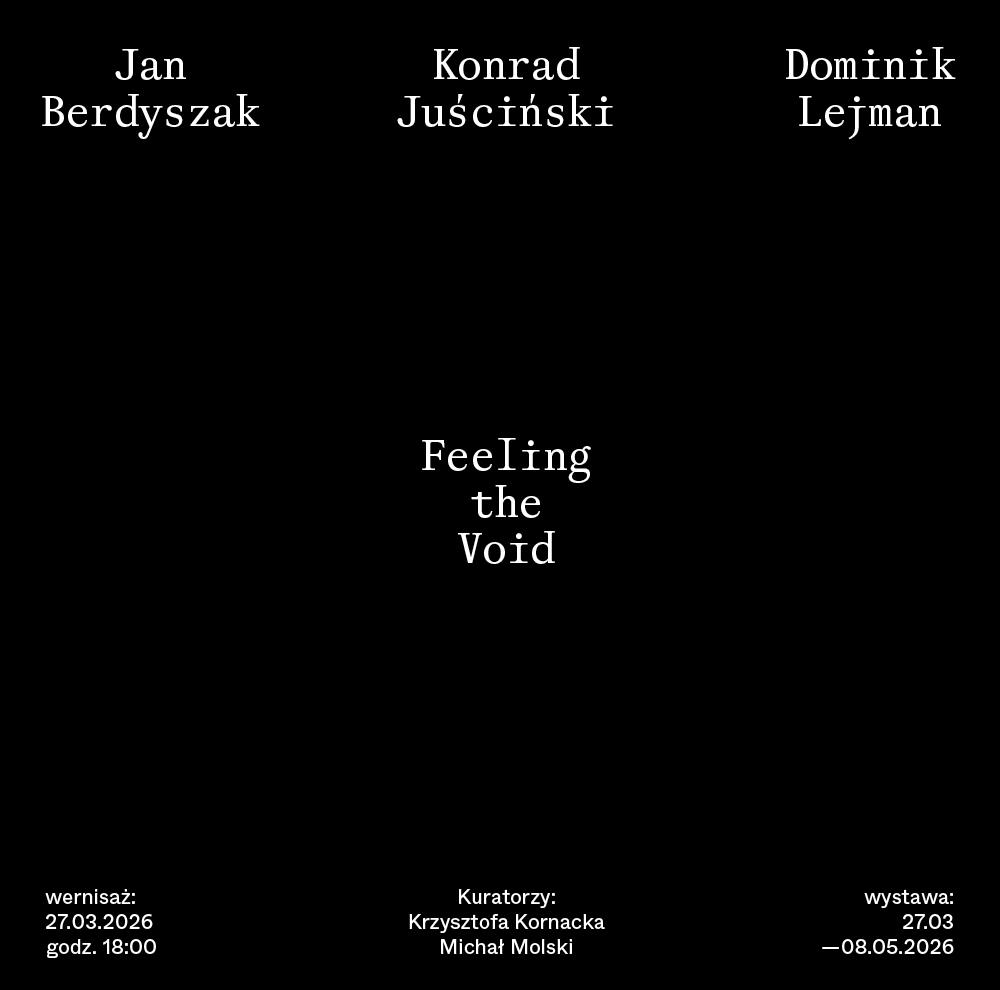
Jan Berdyszak | Konrad Juściński | Dominik Lejman
Feeling the Void
Jan Berdyszak | Konrad Juściński | Dominik Lejman
Feeling the Void exhibition reflects on the notion of emptiness — a concept which in philosophy and aesthetics functions not merely as absence, but as a space of potentiality and intensity. In this context, emptiness does not signify a lack of meaning, but rather a medium in which forms, traces, and projections acquire presence. It is a space of tension where materiality and immateriality, silence and intensity, presence and its absence coexist, and where the viewer becomes a participant in the process of meaning-making.
The title of the exhibition — Feeling the Void — refers both to the sensory, bodily experience of space (feeling) and to the act of seeing and understanding (void). The exhibition is thus situated between sensing and seeing, between intuition and analysis. It proposes a reflection on how contemporary art operates with space as an active component of the artwork, and how it negotiates relationships between what is present and what is withdrawn, between form and its suspension.
The exhibition presents the work of three artists associated with the academic art environment of Poznań, representing different generations and artistic strategies: Jan Berdyszak, Dominik Lejman, and Konrad Juściński. Although their practices differ formally and in terms of media, they share a consistent and multifaceted exploration of the concept of emptiness and the relationships between space, absence, and the trace, object, or projection that may inhabit it.
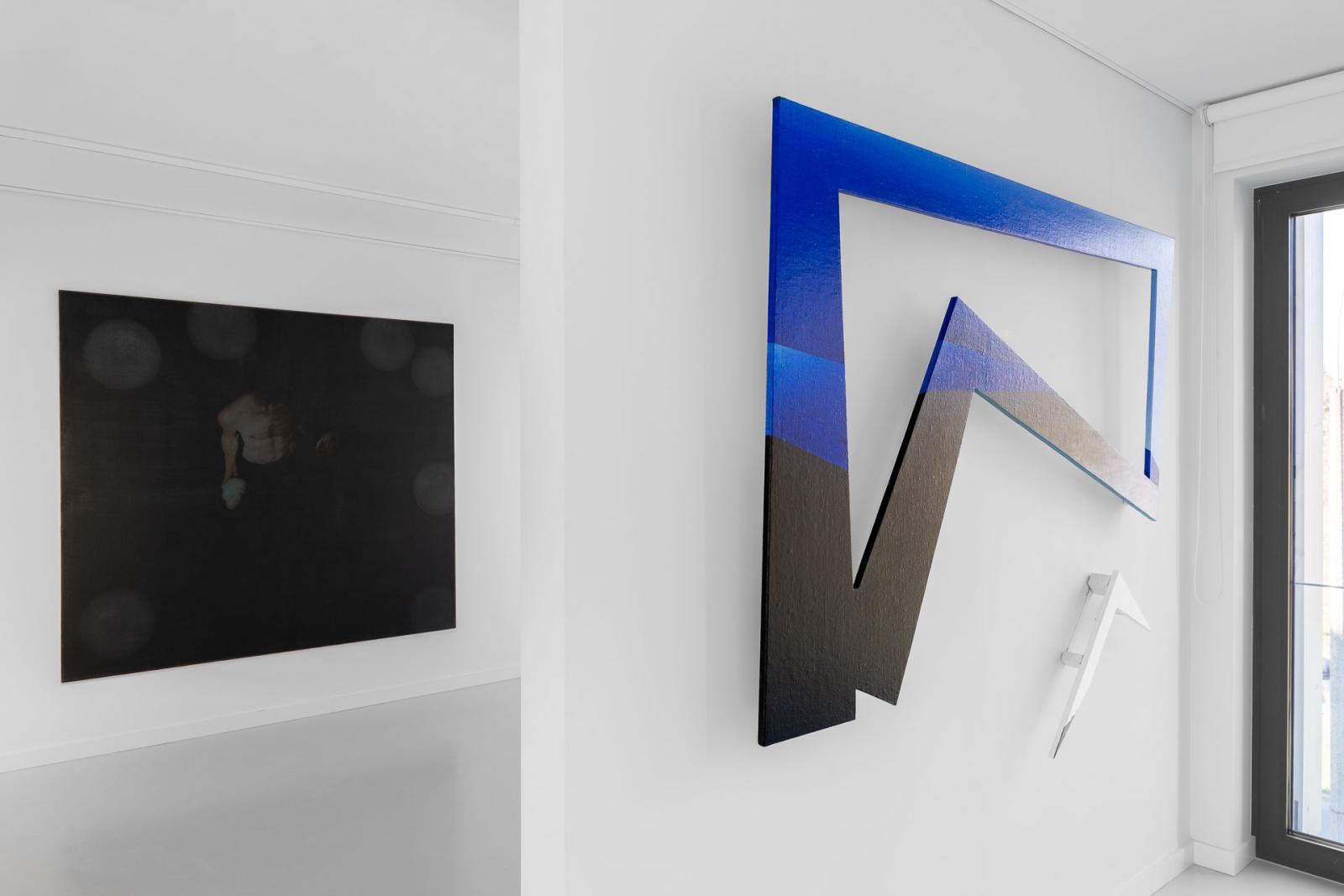
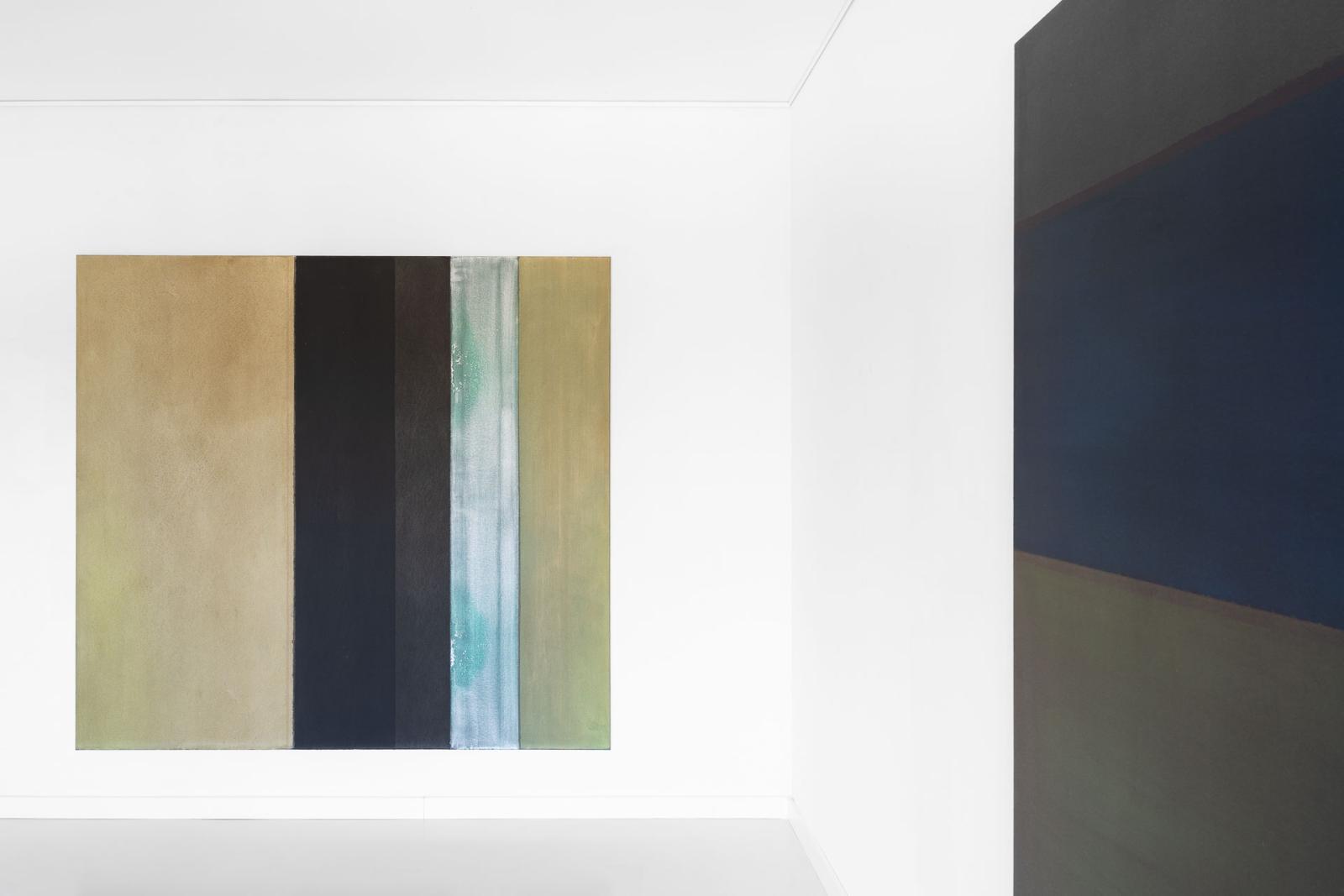
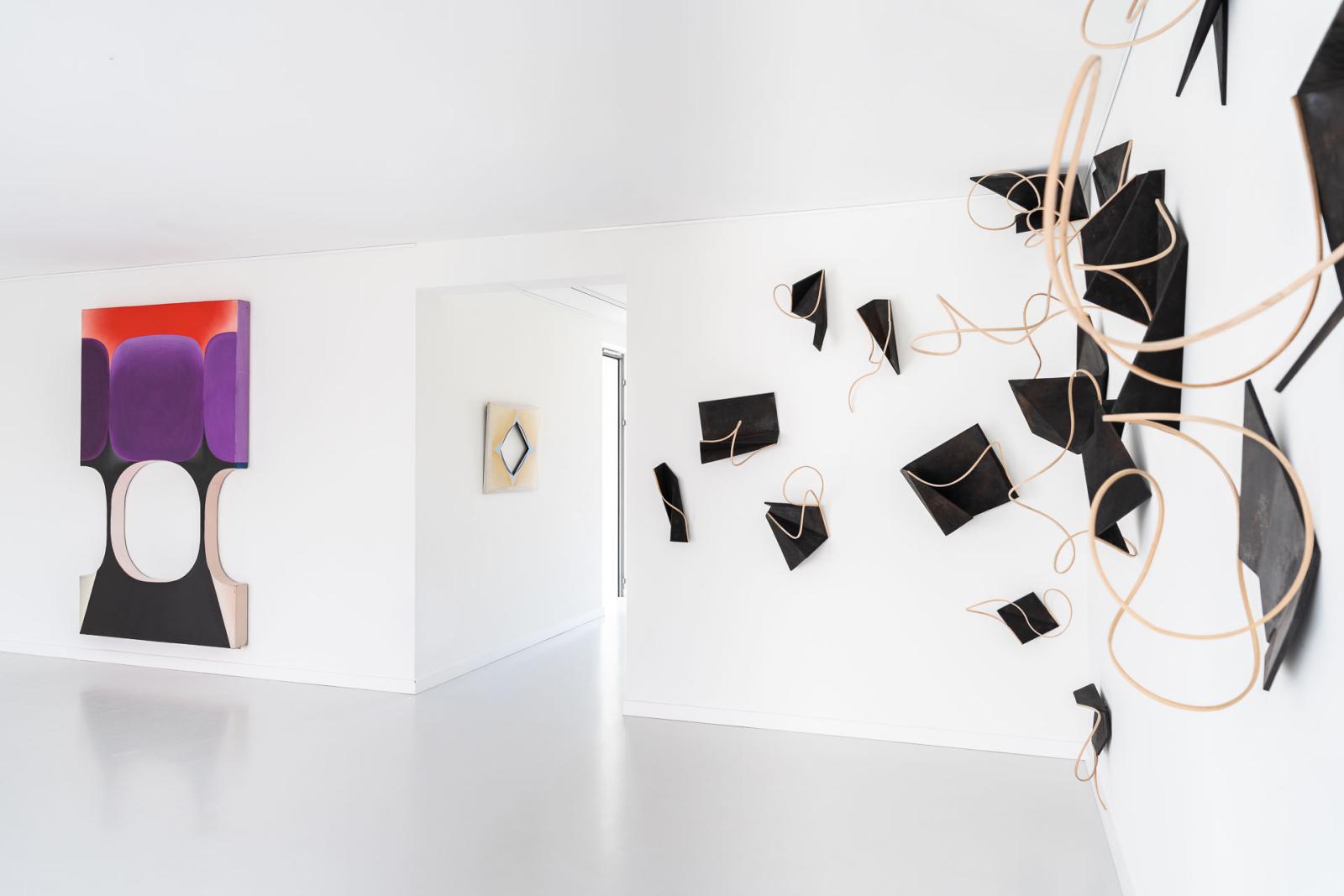
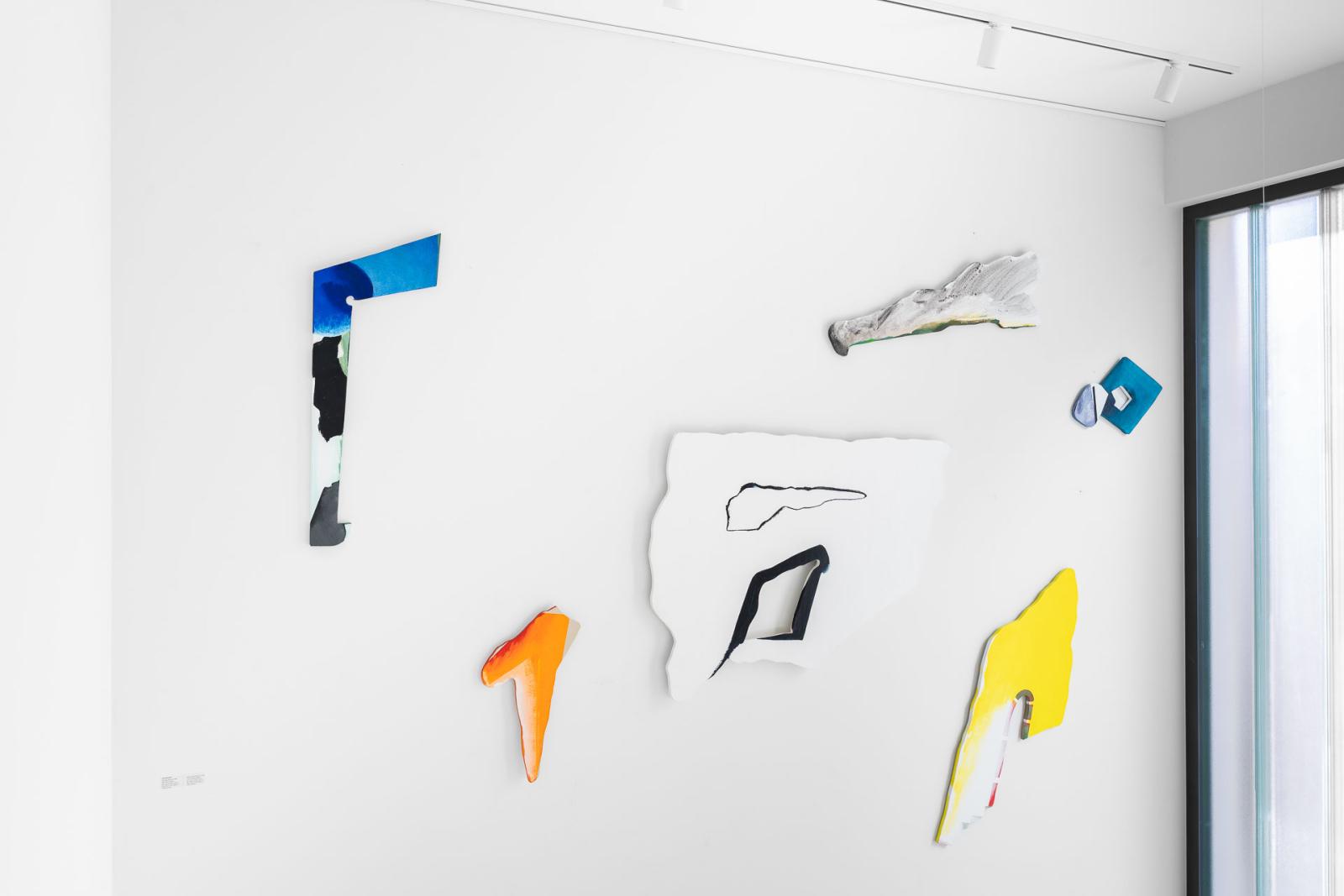
Within the exhibition, works created in various media are juxtaposed — from relief and spatial objects, through painting and video projection, to ephemeral site-specific installations. The dialogue between them constructs an open and ambiguous narrative based on tension, interpenetration, and subtle perceptual shifts.
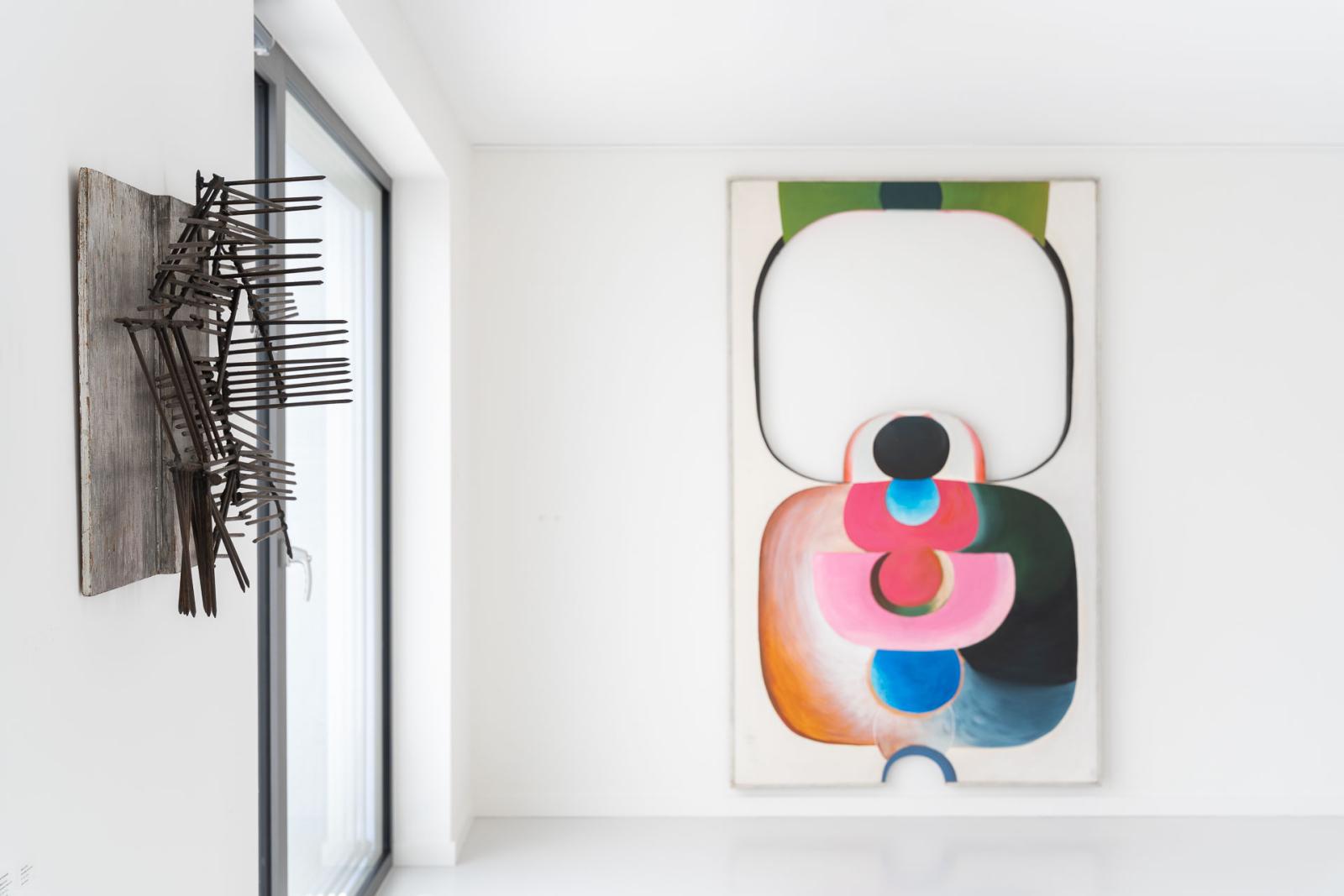
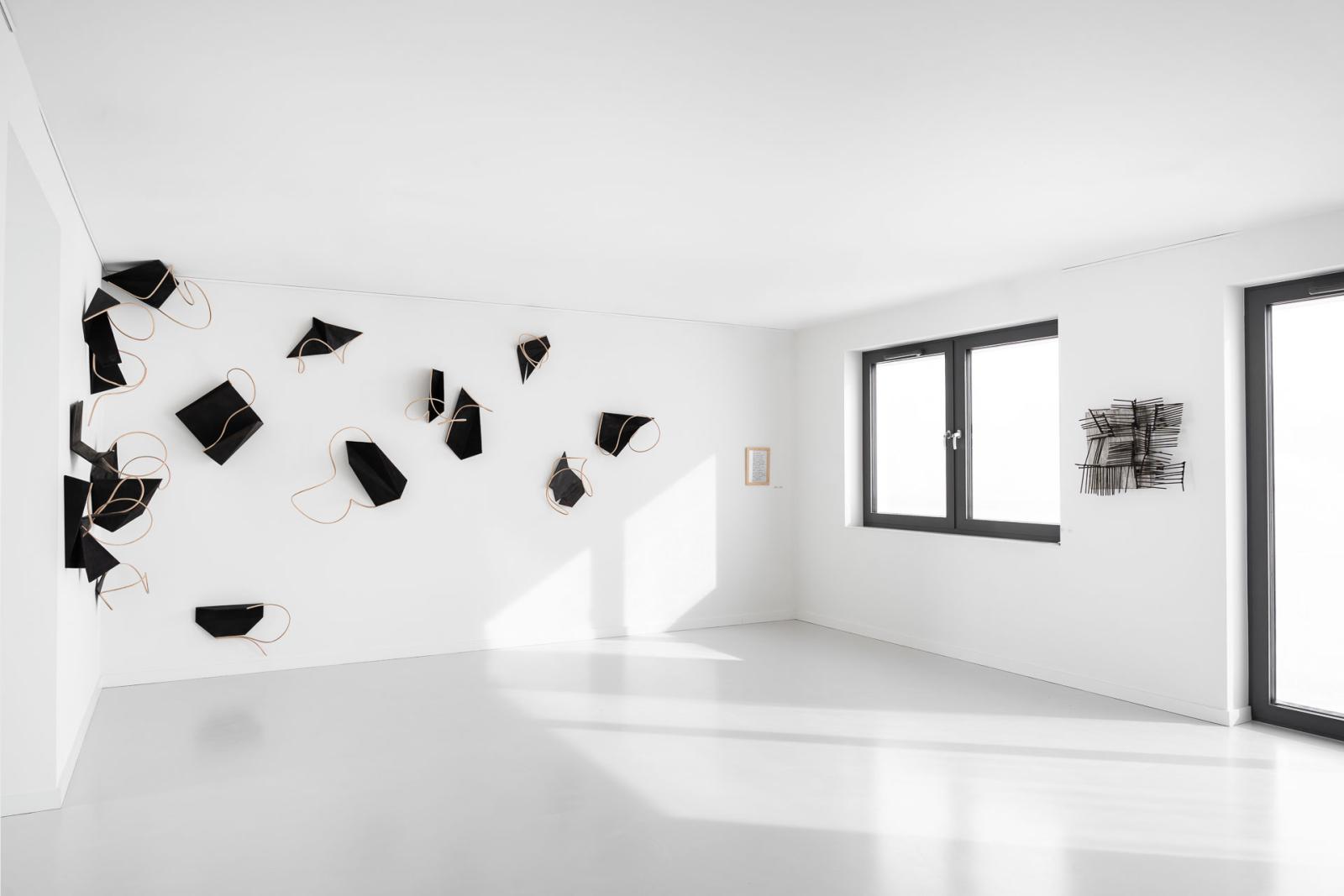
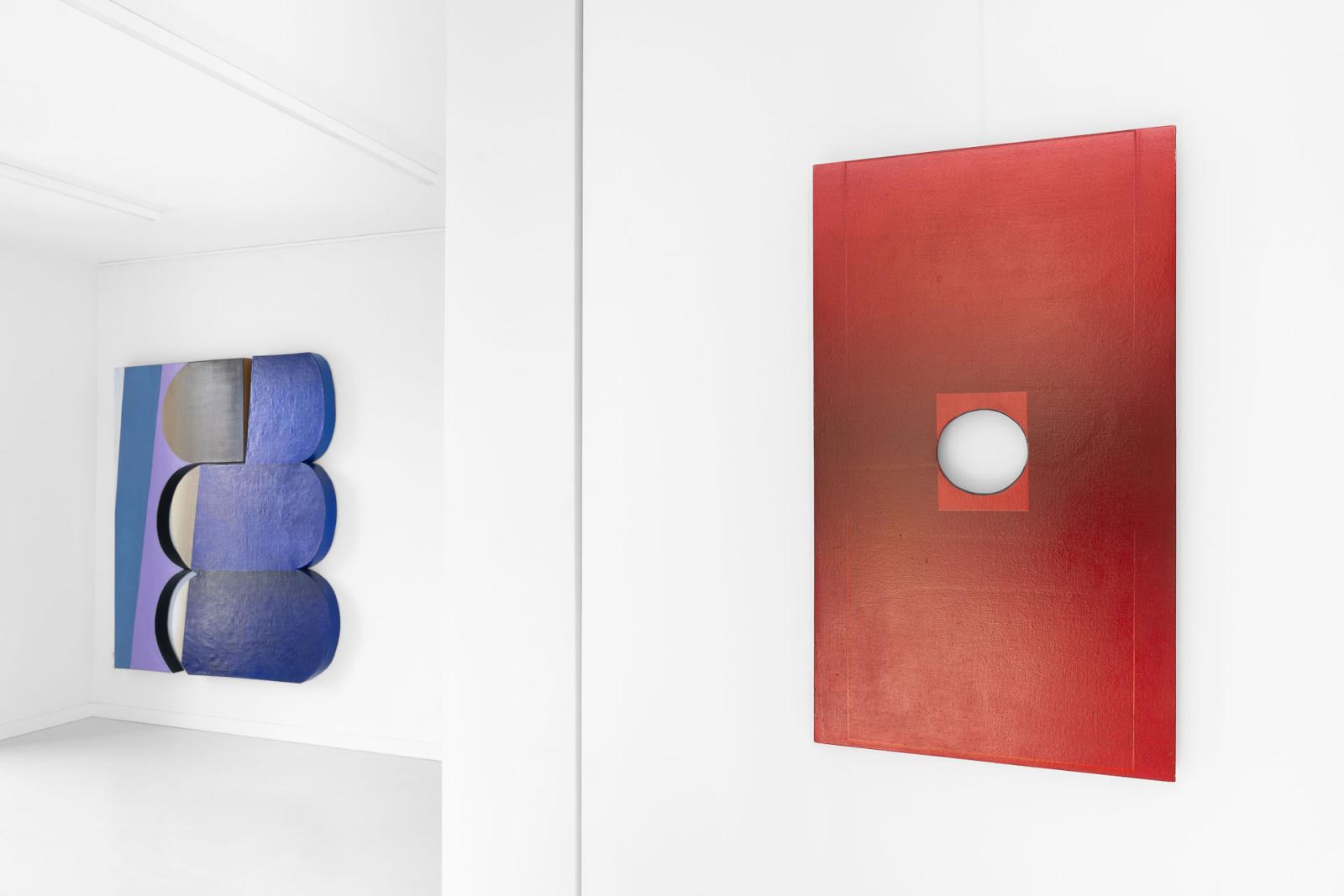
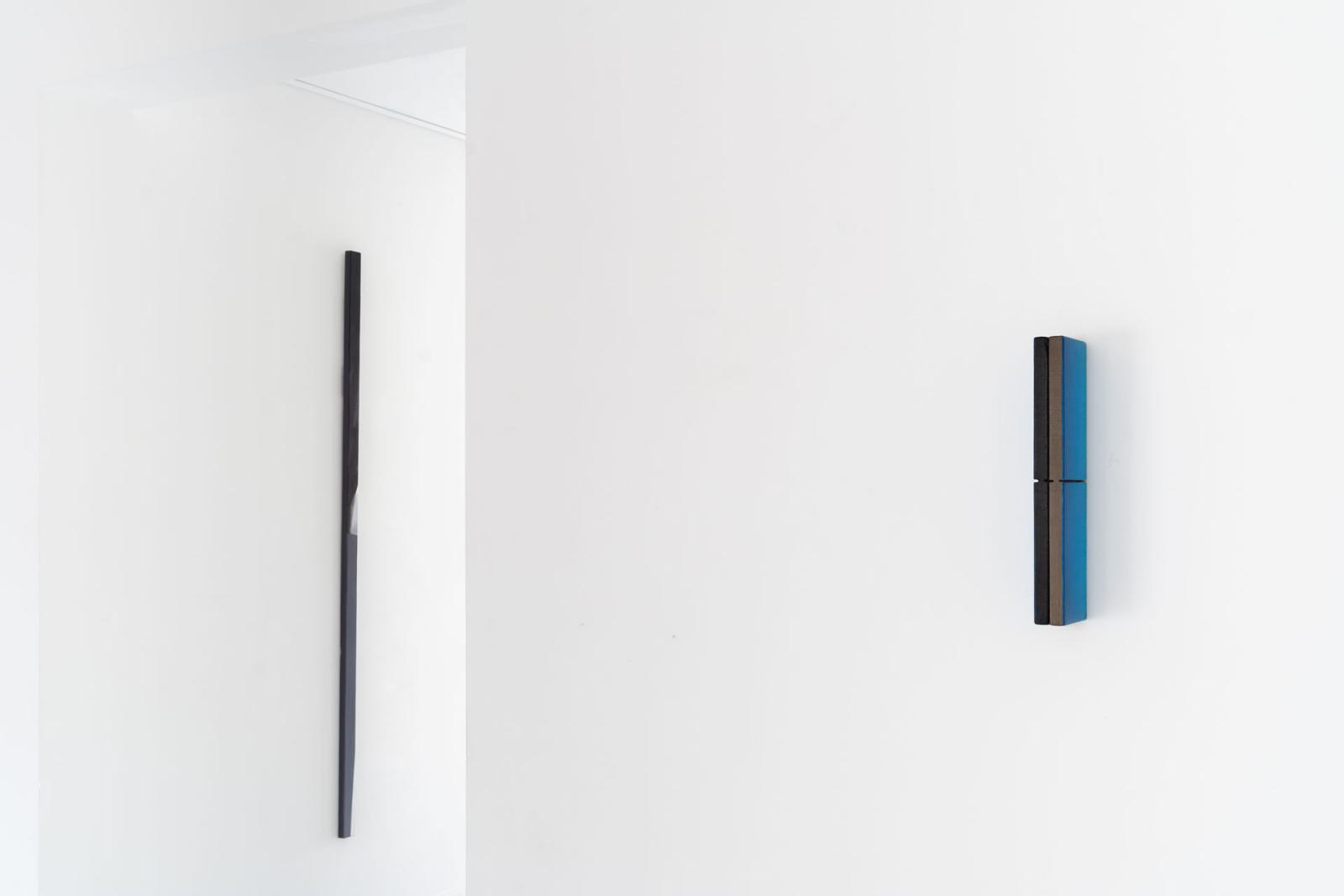
The work of Jan Berdyszak — one of the most significant Polish artists of the second half of the twentieth century — will be represented by multi-element reliefs and spatial-image structures. Rooted in a reflection on the dualism of presence and absence, materiality and lack, his works redefine the notion of the image as a closed whole. In Berdyszak’s approach, space is not a neutral background for form but its constitutive element. Openings, gaps, cut-outs, and rhythmic divisions do not so much disrupt the integrity of the work as establish emptiness as its fully legitimate material. The artist treats space as a substance subject to modelling, and at the same time as an area of active relation with the viewer — drawn into the perceptual process of completing the form.
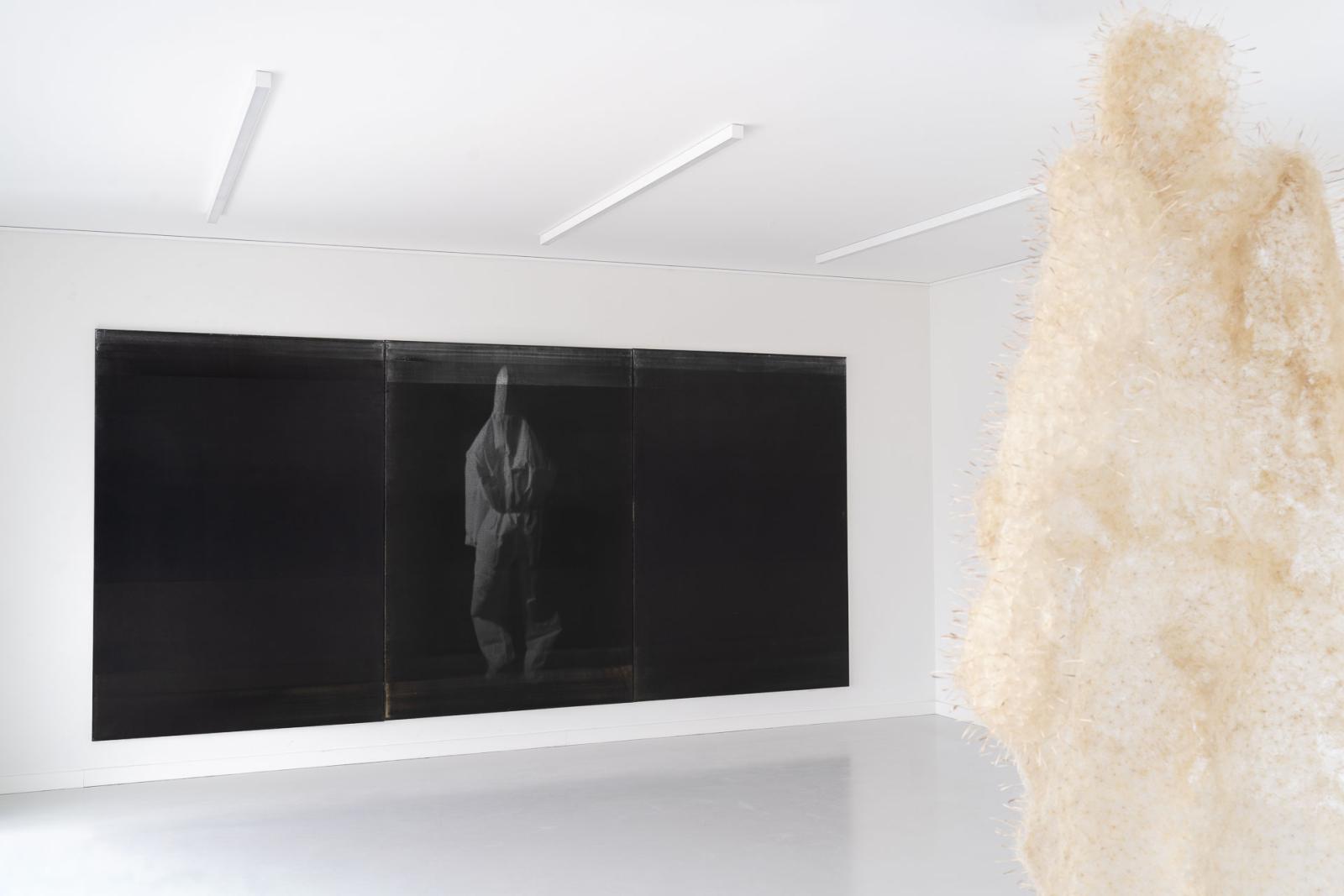
Dominik Lejman presents videofrescoes characteristic of his practice — hybrid works combining wall painting with moving-image projection. In these works, time becomes inscribed within the structure of space, while the static surface of the image becomes a field for subtle, pulsating interventions. The projection does not dominate the painting but coexists with it in a delicate tension. The moving image settles into emptiness like an ephemeral presence that appears and disappears, constantly negotiating its materiality. Lejman explores the boundary between what is lasting and what is momentary, between the physicality of the wall and the immateriality of light.
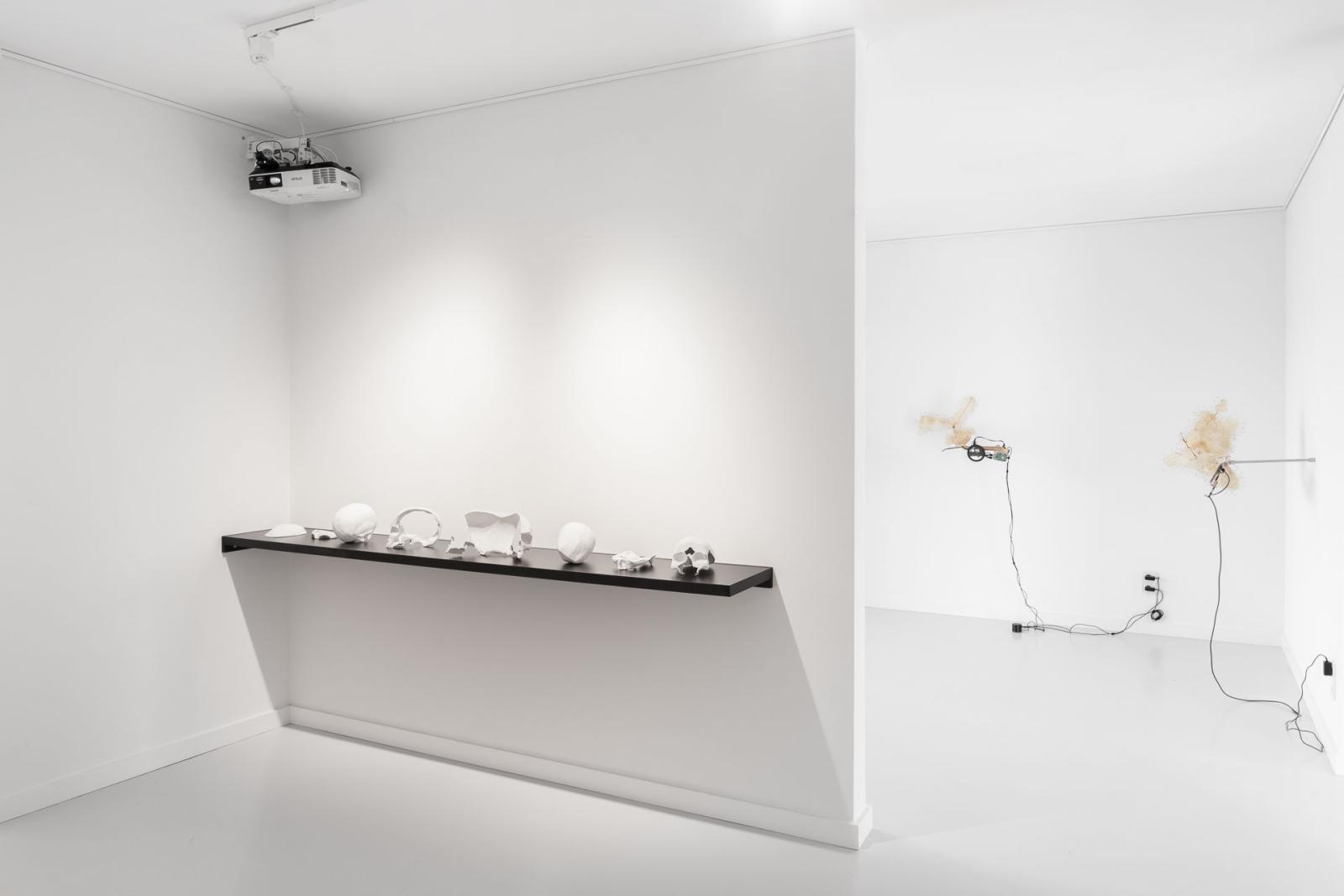
The installations of Konrad Juściński complement the exhibition with a dimension of ephemerality and sensory subtlety. The artist works with light, shadow, transparent materials, and minimal interventions into architectural space. His works do not impose themselves on the viewer but initiate perceptual situations in which emptiness reveals itself as a transitional state — fragile and susceptible to change, yet simultaneously intense and contemplative. Juściński treats space as a dynamic field of relations: between an object and its shadow, light and its disappearance, gesture and its trace.
The juxtaposition of these three approaches is not an attempt to construct a linear history or a generational narrative. Rather, it proposes a shared field of reflection in which different artistic languages converge around the question of potentiality. The exhibition asks how contemporary art can redefine the experience of space — not as a neutral scenography for artworks, but as an active medium of meaning.
Feeling the Void encourages the viewer to engage in attentive experience — to enter into a relationship with what is subtle, almost invisible, yet intensely perceptible. In the proposed narrative, presence and emptiness do not function as opposites; they are interdependent aspects of the same perceptual process. It is precisely in their mutual interpenetration that the possibility of a new way of seeing emerges.
Krzysztofa Kornacka